44 by 1960 the major recording labels were marketing
The History of Stax Records - The Balance Careers Atlantic Record's Jerry Wexler was a huge Stax Records fan and worked closely with the label throughout the 1960s (he even insisted some Atlantic artists record in Stax to get the signature sound). The distribution relationship between Stax and Atlantic seemed to be a good one until Warner bought Atlantic. Record labels in the U.S. - Statistics & Facts | Statista Around 62.1 percent of all recorded music industry revenues come from streaming as of 2020, a percentage that is only expected to increase in the coming years. Among record companies, digital music...
The True Story of Erroll Garner, the First Artist to Sue a Major Label ... Glaser had signed the artist to a five-year deal with Columbia in 1956 and was in the midst of renegotiating it when in 1960, the label began to release songs from Garner's prodigious backlog of ...

By 1960 the major recording labels were marketing
Music history Quiz 4 Flashcards - flashcardmachine.com Rodgers and Hammerstein. Term. Which format, released in 1948, became the major record labels' primary format to sell musical soundtracks? Definition. 33 1/3, 12 inch vinyl. Term. What composer is best known for film and TV scores like Peter Gunn and the Pink Panther, as well as winning 4 Oscars and 20 Grammy's? Definition. 1966 Vs. 1971: When 'Rock 'n' Roll' Became 'Rock,' And What We Lost - NPR Only five years earlier, The Beach Boys had been in rock and roll's first rank, thanks to the critical (and, in the U.K., commercial) success of Pet Sounds but even more so to "Good Vibrations," a ... The Columbia Records Story - History and Artists - LiveAbout The label earned a reputation as the most commercially successful of non-rock labels. Columbia Records did not make a significant impact in rock music until the late 1960s. However, Columbia Records did bid to purchase the contract of Elvis Presley from Sun Records. However, they were turned down in favor of RCA.
By 1960 the major recording labels were marketing. Market share of record companies in 2011-2019, by label ownership Data on the album plus track equivalent albums (TEA) market share of record companies in the United States showed that independent record labels held a market share of 35.13 of all U.S. GRP Records - A Label Built on Sound Principles | uDiscover February 12, 2022. By. Richard Havers. In 1982, two men who were steeped in the jazz tradition started their own label - GRP Records. But the label's history goes back to 1976 when Dave Grusin ... Recording Industry, History of | Encyclopedia.com By the end of the decade six major corporations, Columbia Broadcasting System (CBS), Radio Corporation Of America (RCA), Warner-Elektra-Atlantic (WEA), Britain's Electric and Musical Industries Ltd. (EMI), the Music Corporation of America (MCA), and Polygram, dominated the business. 10 Largest Record Labels in the World - Largest.org Interscope Records. Revenue: $600 million. Year Founded: 1990. Headquarters Location: California, USA. Major Artists: Eminem, Nine Inch Nails. Source: wikimedia.org. Interscope Records is a highly successful record label that reaped the rewards of its first hit in under a year after it was first founded.
History of R&R CH 2 Flashcards | Quizlet Most of rock's originators and many of the independent labels they worked for were out of the music business by 1960. True Both independent and major record labels used payola. True Cover versions of rhythm and blues songs by white artists very rarely performed better on the pop charts than the rhythm and blues originals. Fania Records' Founding Fathers - NPR When Pacheco arrived on the New York music scene in 1959, mambo-mania was sweeping across the U.S. Major record labels capitalized on the fad, and soon records of band leaders like Perez Prado and... Business-to-artist: record labels and sub-labels in the digital age Let's consider Sony, Warner and Universal as the three dominant major labels concerning economics based-theory, as well as Motown (Universal's sub-label today) regarding the psychology based... The history of music distribution | Features - MN2S Artists and labels to have distributed music and videos via torrents include Sub Pop, Nine Inch Nails, Aphex Twin, The Libertines and DJ Shadow - who became the first artist in history to sign a deal with BitTorrent to receive payment every time someone downloaded his new release through the platform.
Music Industry History 1960s - Playlist Research History of Record Labels and the Music Industry: 1960s. 1960s. - Colpix Records was established in 1960 as the record division of Columbia Pictures, although it had no association with Columbia Records. In 1964 Colpix acquired the Bell/Amy/Mala group. A few years later the pop acts on the label's roster were issued on the Bell label. Joe Meek: A Portrait - The JOE MEEK Page In the U.S. this would have been nothing special anymore (around 1960 there were circa 1500 independent record labels working in the U.S., in the mid-sixties the number had doubled), but in the UK, independent labels were unusual at that time; there were hardly a handful of them (probably the best known were Oriole and Ember Records). The Independent Record Labels of the 1950's and 1960's 4291. Throughout the 1950's and 1960's, a wave of new musical movements by independent record labels and new artists emerged in the United States. This movement is captured in the stories of those label creators and owners, and in the turbulent journey through their successes and failures. The first emergence was fueled by multiple factors ... The Record Label's Role in the Music Industry Marketing is one of a record label's most important functions, as public awareness of their brand and associated artists is the way it makes money. Record label logos and their contact information once figured prominently in the center of vinyl records, which is how labels such as Arista, Capitol, and Epic became household names. Major Labels
1000+ images about Record Labels on Pinterest
Major Record Labels As Dinosaurs? - Forbes From the 1960s on, the LP album gave the music industry a main product to push, and business was good. In the 1990s the widespread acceptance of the Compact Disc format gave a giant boost to the...

Sell, Buy or Rent Record Label Marketing, Second Edition 9780240812380 0240812387 online
Independent record label - Wikipedia An independent record label (or indie label) is a record label that operates without the funding or distribution of major record labels; they are a type of small- to medium-sized enterprise, or SME.The labels and artists are often represented by trade associations in their country or region, which in turn are represented by the international trade body, the Worldwide Independent Network (WIN).
Record labels
How 'Race Records' Turned Black Music Into Big Business Not all race record labels were white-owned:Black Swan Records, for example, released about 150 race records, including recordings of black classical musicians. However, the label ran into ...

Record_Labels_of_the_1970s
6.2 The Evolution of Popular Music - Understanding Media and Culture Figure 6.4. The Chicago blues, characterized by the use of electric guitar and harmonica, provided the foundations of rock and roll. Muddy Waters was one of the most famous Chicago blues musicians. Nesster - Muddy Waters at Newport 1960 - CC BY-SA 2.0. The 1920s through the 1950s is considered the golden age of radio.

Record Labels....Then and Now
Record label - Wikipedia Major versus independent record labels. Record labels may be small, localized and "independent" ("indie"), or they may be part of a large international media group, or somewhere in between.The Association of Independent Music (AIM) defines a 'major' as "a multinational company which (together with the companies in its group) has more than 5% of the world market(s) for the sale of records or ...

The 10 Best Record Labels of 2011 - FACT Magazine: Music News, New Music.
History of Record Labels and the Music Industry by Alex Cosper Although Edison founded the huge conglomerate General Electric in 1892, he would prove to be unsuccessful at marketing music in the next century, as Edison Records collapsed in the Great Depression while Columbia and Victor survived as the biggest record labels.

Pin on Record Labels
6.4 Current Popular Trends in the Music Industry Between 1950 and 1980, a large number of major record labels and numerous independent labels competed for a share of the musical pie. Gradually, the larger labels began buying up the independent labels, and then started trying to purchase each other. By the late 1990s, only six major labels remained: Warner, Universal, Sony, BMG, EMI, and Polygram.

**RARE IMPORTS** Various Artists - 33 Record Lot (12 Different Labels 1940s-50s) | eBay
Philips Record Label - history The Philips record label was started in the Netherlands by Philips Phonographische Industries (PPI) in June 1950 when it began issuing classical 78 rpm recordings. Recordings were also made with popular artists of various nationalities and with classical artists from Germany, France and Holland.
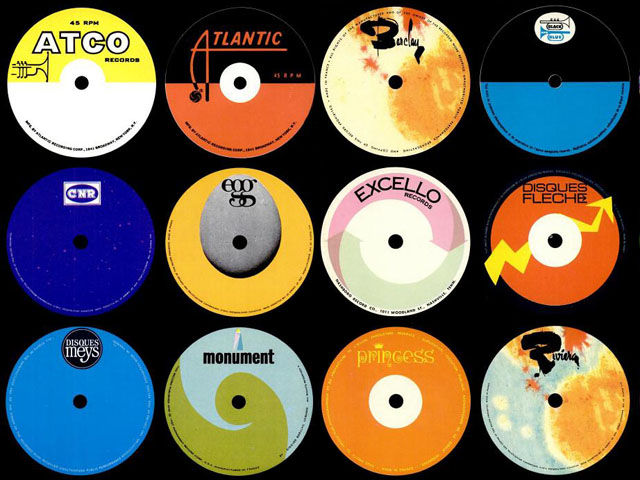
Vintage Record Labels Abound on This 1970 Barclay Group Ad – The Man in the Gray Flannel Suit
60s Motown: When An Independent Detroit Record Label Ruled The World Motown's 60s represented the label's commercial peak. It had built from almost nothing to a recording empire. By 1969 the music business was changing, with an emphasis on the long-playing album,...
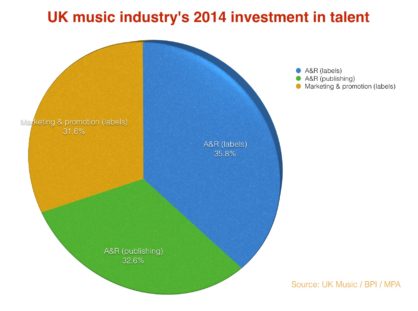
Who spends more on A&R: Record labels or music publishers? - Music Business Worldwide
Major Pop Record Labels: The Big Three - LiveAbout The major labels today are all three media conglomerates that operate a number of specific label imprints, or the actual company logo stamped on the recording. Consolidations brought the number of major labels down from six in 1999 to three today. Major labels account for about 70 percent of music sales by recent estimates. 01 of 03
Post a Comment for "44 by 1960 the major recording labels were marketing"